Compassionate Grief Work: Innovative Techniques for Healing
$447 USD $247
On-Demand Course Length: 3 Hours
"Compassionate Grief Work: Innovative Techniques for Healing," offers a nuanced exploration of grief, defining it as an innate attachment-related process often hindered by various mediating factors. It delves into the distinctions between grief and mourning, emphasizing that while grief can become somatically "stuck," mourning represents the natural embodiment of loss, and highlights the unique complexities of grief intertwined with trauma, particularly relational trauma. The package challenges the notion of "closure," instead advocating for cultivating a "potent pause" to sit with the void of loss and fostering a new, ongoing relationship with those who are gone. Through innovative techniques like therapeutic letters, psychodrama, somatic focusing, breathwork, and ritual, this program equips practitioners and individuals with powerful tools to navigate and heal the multifaceted experience of grief, even in the presence of complex traumatic symptoms.
ADD TO CARTAbout the course
We've all sat with a grieving client and wondered: What do I say? How do I support them beyond words? Often we feel helpless, reaching for language or tools that feel too small for the depth of what's being felt. Yet grief is not something to fix, solve, or move past. It's something to be held, honored, and witnessed. This profound course, led by Dr. Scott Lyons, founder of the Embody Lab, invites you to approach grief not as a clinical task, but as a relational and somatic journey—one that unfolds in the body, in the nervous system, and in the presence of compassionate witnesses.
Beyond Words:
As therapists and coaches, we're trained in techniques and interventions. But grief often renders our usual tools inadequate. This course provides not just techniques, but the attunement, the embodied presence, and the grounded practices you've been looking for to truly support your clients through their grief process. Because grief isn't a problem to be solved—it's a journey to be accompanied.
What You'll Learn:
Through four comprehensive modules from expert faculty including Karee Powers, Sergio Ocampo, Dr. Frank Anderson, and Dr. Amber Elizabeth Gray, with profound insights from special guests Deb Dana and Dr. Bessel van der Kolk, you'll discover how to:
Module 1: Grief 101 with Karee Powers
Understanding Grief's Faces:
- Describe common grief experiences through relevant examples
- Recognize diverse manifestations of grief
- Understand that grief looks different for everyone
- See beyond stereotypical presentations
Mediating Factors:
- Analyze various mediators that influence grief experience:
- Nature of the relationship
- Circumstances of the loss
- Cultural and spiritual background
- Previous experiences with loss
- Available support systems
- Concurrent life stressors
- Differentiate how these factors shape individual grief journeys
- Recognize complexity of grief experience
Essential Tasks:
- Utilize essential tasks involved in navigating grieving process
- Understand framework for grief work
- Apply structure while honoring individual paths
- Support clients through necessary grief work
Contemplative Exercises:
- Practice contemplative exercises for self-awareness
- Deepen personal understanding of grief
- Build capacity to be present with others' grief
- Cultivate groundedness in grief work
Module 2: Mobilizing Grief that is Stuck with Sergio Ocampo
Grief vs. Mourning:
- Grief: Can be debilitating, overwhelming, unrelenting; often gets "stuck" in body
- Mourning: Natural course of embodied processing of loss
- Compare similarities and differences
- Recognize distinct manifestations in cognitive and bodily systems
- Understand when grief is stuck vs. flowing
When Grief Gets Stuck:
- Identify when trauma or overwhelm causes grief to lodge in body
- Recognize cognitive approaches often make little inroads
- Understand somatic causes of stuck grief
- See body-based manifestations
Somatic Resolution:
- Work somatically to quickly resolve stuck grief
- Facilitate healthier and long-lasting resolution
- Use body-based interventions for relief
- Support natural mourning process to emerge
Practical Interventions:
- Apply somatic self-supportive grief interventions
- Use effectively for personal practice
- Implement with clients
- Incorporate into existing therapeutic work
- Help heal existing traumatic symptoms while supporting grief
Essential Understanding:
- Grasp what grief and mourning truly are
- Differentiate between stuck and flowing grief
- Work with both more effectively
- Support grieving clients with somatic awareness
Module 3: Grieving the Relational Wounds with Dr. Frank Anderson
Trauma and Grief Intersection:
- Understand complex PTSD (relational trauma) inherently involves loss
- Recognize relational violations automatically perpetuate loss dimension
- See how all traumas incorporate grief and loss
- Distinguish between types of grief and loss
Acute vs. Relational Grief:
- Acute grief: Loss of loved one through death
- Relational trauma grief: Loss from relational violations
- Describe critical differences between types
- Understand different processing dimensions
- Recognize distinct healing requirements
Healing Relational Trauma:
- Release energy absorbed from perpetrators
- Address internalization of distorted responsibility
- Work with trauma-organized parts of self
- Navigate complexity of relational grief
- Understand unique aspects of healing process
IFS for Grief:
- Work with parts carrying grief and loss
- Understand trauma-organized parts
- Support unburdening of grief-related burdens
- Facilitate integration while honoring loss
Navigating Dual Griefs:
- Process unresolved past trauma-related grief
- Work with present acute grief
- Understand how they interact and complicate each other
- Resist societal pressure to "move on" prematurely
- Honor the time grief requires
Societal Context:
- Recognize societal tendency to rush grief
- Understand pressure to move on too quickly
- Support clients in resisting premature closure
- Create space for grief's natural timeline
Module 4: The Tools for Processing Loss with Dr. Amber Elizabeth Gray
The Potent Pause:
- Utilize breath-based contemplative practice
- Enhance ability to pause consciously
- Develop capacity to be with grief without rushing
- Build tolerance for stillness in loss
Pause as Therapeutic Practice:
- Apply intentional pause to support clients
- Use pause as intervention for grief and loss
- Understand power of slowing down
- Create space for what's present
Ancestral Relationships:
- Compile practices for cultivating new ancestral relationships
- Help clients connect with those they've lost
- Transform relationship from absence to presence
- Work with ancestors as ongoing resource
Continuing Bonds:
- Support clients in maintaining connection to deceased
- Facilitate new form of relationship
- Honor ongoing presence of those who've died
- Move beyond "letting go" to transformed connection
Core Insights from Deb Dana:
Each Nervous System Has Its Own Path:
Deb Dana shares from her personal experience after losing her husband Bob: "I find for myself, I don't fit [with standard grief advice] and I don't think I'm the only person for whom that's true." This brings us back to the nervous system—each one has its own path toward healing and recovery.
What we need is a general outline, then let everybody create their own plot within that outline. This is crucial for working with grief: we offer frameworks, not formulas. We invite clients to find what works for their unique nervous system.
The Unpredictable Dance:
Your dysregulated states—dorsal rescue (helping you disappear, collapse, shut down) and sympathetic (anger, anxiety)—are going to move back and forth, back and forth during the grief journey. There's no one way to do this.
Interestingly, our nervous systems respond to what's needed in the moment. During larger moments of grief and loss, the nervous system sometimes says, "I don't want to respond the way I have before. I need to do it differently." We can be curious about this when we have enough regulating ventral energy on board.
The Goal: Enough Regulation to Ride the Waves:
The intention is to have enough ventral regulation so you can:
- Ride the survival moments (not avoid them)
- Come back to regulation (resilience marker)
- Be curious about what brought this up
- Reflect on the experience
Because grief is unpredictable. You go through a period where you're feeling like you're becoming organized in a new way ("life after Bob"), and then suddenly you're blindsided by something you absolutely would not have predicted.
The beauty is having enough regulation to ride those moments out or come back to regulation, then be able to reflect. This is resilience.
Gentleness and Trust:
For anyone in a more recent grief experience, that sense of gentleness is important. Trust in the inherent wisdom of your nervous system. Our nervous systems long to be in regulation—that's the biological human experience. The nervous system wants to get us to regulation and help us stay there, and it inherently knows how to do that.
If we can find a pathway and travel it for a moment, it becomes easier to travel that pathway again. So the work is: gentle, patient, participant, and having kindness toward yourself.
The Language Question:
Deb discovered "kindness" works for her nervous system, while "self-compassion" doesn't. Her nervous system hears "self-compassion" and says "Uh-uh. Nope, not happening." But "kindness"? "Oh, I could do that."
Learning from the nervous system, language is so important. Invite people to find the language that works for them. Self-compassion may work for you. It may not. Kindness may work. It may not.
When working with clients, we must remember: each nervous system has its own preference for specific words. When we think "this is the word" or "we're going to work with self-compassion today," we may be sending a cue of danger to our client's nervous system.
The Guiding Question:
Always ask: What does the nervous system need in this moment to feel welcomed? It's about feeling welcomed.
When friends send grief suggestions, remember: it comes from another nervous system saying, "This is what would help me." Then you have to ask: "Does it help me?"
In clinical work, bring that curiosity and find what fits for their nervous system. Frame it: "Here is something that my nervous system found helpful. Let's see how it lands for you." That's the offering, the invitation. And that's saying it may absolutely not land for you—and that's perfectly fine. In fact, that's normal and right.
Core Competencies Developed Across All Modules:
Understanding Grief:
- Recognize diverse faces and manifestations
- Identify mediating factors shaping individual experiences
- Distinguish acute grief from relational trauma grief
- Differentiate stuck grief from natural mourning
- Understand essential tasks in grief process
Nervous System Literacy:
- Track movement between dorsal, sympathetic, and ventral states
- Recognize grief's unpredictability and nervous system responses
- Build enough ventral regulation to "ride survival moments"
- Understand resilience as returning to regulation
- Honor each nervous system's unique path
Somatic Approaches:
- Identify when grief is stuck in body
- Apply somatic self-supportive interventions
- Work with embodied grief vs. cognitive processing
- Facilitate natural mourning process
- Use breath-based practices for grief work
Relational and IFS Perspectives:
- Understand inherent loss in relational trauma
- Work with trauma-organized parts carrying grief
- Release absorbed energy from perpetrators
- Address distorted responsibility
- Navigate complex layers of grief
Therapeutic Presence:
- Practice potent pause
- Apply intentional pause as intervention
- Hold space without rushing or fixing
- Witness grief with compassionate presence
- Resist pressure to move clients through grief prematurely
Language and Attunement:
- Find language that welcomes each nervous system
- Offer frameworks, not formulas
- Invite clients to discover what works for them
- Track what lands vs. what creates danger cues
- Honor individual differences in grief expression
Ancestral Work:
- Facilitate new relationships with deceased
- Support continuing bonds
- Transform loss into transformed connection
- Use ancestral relationships as resource
Self-Awareness:
- Develop personal relationship with grief
- Build capacity through contemplative practice
- Recognize own patterns and preferences
- Ground yourself for holding others' grief
Expert Faculty:
Learn from Karee Powers, Sergio Ocampo, Dr. Frank Anderson, and Dr. Amber Elizabeth Gray, with profound personal and professional wisdom from special guests Deb Dana (sharing from her own grief journey after losing her husband) and Dr. Bessel van der Kolk.
What Makes This Course Essential:
Most grief training focuses on stages, tasks, or techniques. This course teaches something deeper:
- How to be with grief, not just intervene on it
- How to track nervous system through grief's unpredictability
- How to honor each person's unique path
- How to work somatically when grief is stuck
- How to hold space without rushing or fixing
- How to distinguish mourning from stuck grief
- How to work with relational trauma's inherent loss
- How to cultivate ongoing connection with deceased
The Fundamental Shift:
Traditional grief work often aims to help people "move through" or "complete" grief. This course offers a different paradigm:
Not: Moving past grief → But: Being with grief as it moves Not: Fixing or solving → But: Holding, honoring, witnessing Not: One way to grieve → But: Each nervous system's unique path Not: Stages to complete → But: Unpredictable dance to ride Not: Letting go → But: Transformed relationship
As Deb Dana's experience illuminates, grief doesn't follow predictable patterns. You can feel organized in a "new way" (life after loss), then be blindsided by something completely unexpected. The goal isn't to prevent these moments—it's to have enough regulation to ride them out, come back, and be curious.
The Somatic Distinction:
Sergio Ocampo's teaching reveals a critical understanding: grief and mourning are not the same.
Grief:
- Can get stuck in the body
- Debilitating, overwhelming, unrelenting
- When sufferers have endured trauma or overwhelm
- Cognitive approaches make little inroads
- Requires somatic resolution
Mourning:
- Natural course of embodied processing
- Flow of loss through the system
- What emerges when stuck grief is released
- Healthy integration of loss
When grief is stuck, it needs somatic intervention. When it's flowing as mourning, it needs witnessing and space. Knowing the difference changes everything about how we work.
The Relational Trauma Layer:
Dr. Frank Anderson's perspective adds crucial depth: complex PTSD (relational trauma) inherently involves loss. Relational violations automatically perpetuate a loss dimension. This means:
- Healing relational trauma includes grief work
- Energy absorbed from perpetrators must be released
- Distorted responsibility must be addressed
- Trauma-organized parts carry grief
- Past trauma-related grief complicates present acute grief
When clients come with "just grief," they may also be carrying layers of relational trauma grief. When they come with trauma, grief is embedded within it. Understanding this intersection is essential.
The Pause as Practice:
Dr. Amber Elizabeth Gray's teaching on the "potent pause" offers a simple yet profound intervention: the capacity to pause, to be with what is, without rushing to the next thing. In grief work, this is revolutionary.
Our culture pushes us to move on, get over it, return to normal. The potent pause resists this. It says: "This moment deserves presence. This loss deserves time. This grief deserves space."
Teaching clients to pause—and modeling it ourselves—creates conditions where grief can actually be processed rather than bypassed.
Ancestral Relationships:
The module on cultivating new ancestral relationships offers a beautiful reframe: death doesn't end relationship; it transforms it. Rather than "letting go," we can develop new forms of connection with those who've died.
This isn't about denial or pretending they're still alive. It's about recognizing that our dead can become ancestors—sources of wisdom, support, and connection that continue to nourish us. This transforms grief from pure absence to transformed presence.
The Therapist's Challenge:
Working with grief challenges us in unique ways:
- We want to help, but grief can't be fixed
- We want to say something, but words often feel inadequate
- We want to ease pain, but grief must be felt
- We want to know what to do, but each person's path is different
- We want predictability, but grief is wildly unpredictable
This course helps practitioners navigate these challenges by:
- Shifting from doing to being
- Building capacity to sit with helplessness
- Developing somatic and relational interventions
- Trusting the nervous system's inherent wisdom
- Honoring grief's unpredictability
- Finding what welcomes each person's unique system
Transformation Through Accompaniment:
This course supports professionals in helping clients:
- Feel held, honored, and witnessed in their grief
- Recognize their nervous system's unique grief path
- Build enough ventral regulation to ride survival moments
- Distinguish stuck grief from natural mourning
- Release grief lodged in the body
- Process relational trauma's inherent loss
- Navigate unpredictable waves with resilience
- Find language that welcomes their system
- Practice potent pause
- Cultivate new relationships with deceased
- Trust their nervous system's inherent wisdom
- Experience gentleness, patience, kindness toward self
- Allow grief to move through rather than staying stuck
Who This Is For:
Essential training for:
- Therapists working with grieving clients
- Practitioners feeling inadequate in face of grief
- Clinicians wanting somatic approaches for stuck grief
- Anyone working with trauma (which includes grief)
- Professionals wanting to honor each person's unique path
- Practitioners needing to build their own capacity for grief work
- Clinicians using IFS with grief and loss
- Anyone wanting to move beyond stages models
- Professionals working with relational trauma
- Practitioners interested in ancestral healing approaches
What Makes This Profound:
Deb Dana's willingness to share from her own grief journey—losing her husband Bob—brings this teaching from abstract concepts to lived reality. Her insights aren't theoretical; they're born from moving through the unpredictable terrain of grief while bringing her deep understanding of the nervous system.
This combination—personal experience meeting professional expertise—creates teaching that lands differently. You're not just learning techniques; you're receiving wisdom earned through actually walking the path.
The Core Truth:
Grief is not something to fix, solve, or move past. It's something to be held, honored, and witnessed. It unfolds in the body, in the nervous system, and in the presence of compassionate witnesses.
Each nervous system has its own path through grief. There's no one way. What works is having enough ventral regulation to ride the survival moments, come back to regulation, and be curious. It's about building resilience—not to avoid grief, but to move with it.
The nervous system longs for regulation and inherently knows how to get there. Our job isn't to force a path but to help clients find their pathways, travel them, and strengthen them through use. The work is gentle, patient, participant—with kindness toward self.
And when grief gets stuck in the body—when cognitive approaches aren't reaching it, when it's debilitating and overwhelming—somatic interventions can facilitate release so natural mourning can flow. Because stuck grief needs resolution; flowing mourning needs witnessing.
When we understand all this—when we can track the nervous system, work somatically, honor individual differences, resist rushing, hold the unpredictability, and trust the inherent wisdom—we can truly accompany clients through their grief journeys. Not fixing or solving, but holding, honoring, witnessing.
That's compassionate grief work. That's what this course offers. Not techniques to apply, but ways of being that create the conditions where grief can do what it needs to do—in its own time, in its own way, through each person's unique nervous system.
Essential training for practitioners ready to meet grief not as a clinical task but as a sacred journey—one that unfolds in the body, in the nervous system, and in the presence of compassionate witnesses who know that the greatest gift we can offer is our grounded, attuned, welcoming presence.
Join our brilliant experts for the following sessions:
KAREE POWERS
Karee Powers, LICSW, EMDR-C is certified in EMDR and is an EMDR trainer and consultant. She has over 17 years of experience providing psychotherapy in a variety of settings including inpatient facilities, and non-profit organizations offering care for children, adolescents and adult survivors of abuse, neglect, combat trauma, sexual trauma, phobias, generational trauma, and interpersonal traumas. Her private practice and training is centered in work with complex trauma and dissociation, using EMDR, CBT, psychodrama, somatic psychology, and mindfulness. She graduated from the University of North Carolina, Chapel Hill with her Master’s in Social Work.
Website: www.empowertherapygroup.com
FRANK ANDERSON
Frank Anderson, MD, is a world-renowned trauma expert, Harvard-trained psychiatrist and global speaker. He is the co-author of the IFS Skills Training Manual (2017), acclaimed best-selling author of Transcending Trauma (2021) and newly released memoir, To Be Loved: A Story of Truth, Trauma and Transformation (2024). Dr Anderson has a long affiliation with Bessel van der Kolk at the Trauma Research Foundation and is a lead trainer at the IFS Institute under Richard Schwartz. He is passionate about teaching brain-based psychotherapy and integrating current neuroscience knowledge with cutting edge models of therapy.
Dr. Anderson believes that traumatic events can have a lasting effect on the health and well- being of individuals and that addressing these events will help lead people down a path of love, connection and unity. He is the director and cofounder of the Trauma Institute (traumainstitute.com) and Trauma-Informed Media (trauma-informedmedia.com), organizations that provide educational resources and promote trauma awareness. As a result of his early childhood experiences and personal journey transformation, he is dedicated to bringing more trauma healing to the world. He splits his time between Boston and Los Angeles where he lives with his husband and two sons. Follow him at FrankAndersonMD.com and on Instagram @frank_andersonmd.
DR. AMBER ELIZABETH GRAY
Dr. Amber Elizabeth L. Gray is a Dance/Movement Therapist, Somatic & Human Rights Psychotherapist, and long-time yoga and Continuum teacher. She works with survivors of war, torture, human rights abuses and historical trauma and oppression, in the US and in active and post conflict zones, refugee camps, and disasters. Equally activist, artist, advocate, author, mystic and therapist, her clinical, healing, educational and organizational work endeavors to promote reciprocity and empowerment and incite meaningful change. She brings her Polyvagal, Heart & Spirit-informed Right to Embody somatic human rights framework and Body of Change eco-somatic regenerative retreats to communities of therapists, artists, global citizens and change makers world-wide. Amber originated Polyvagal-informed Somatic & Dance/Movement Therapy through 25 years of immersive mentoring and exploration of Polyvagal Theory. This work is a survivor-centered, multi-cultural & social justice framework that reflects many years of co-inquiry with her clients to understand how Polyvagal Theory promotes restoration and healing in the body-heart-mind-spirit for survivors of egregious human rights violations. She has been teaching this work globally since 2003 and is the inaugural member of The Polyvagal Institute’s Editorial Board.
Website: www.ambergray.com
Facebook: www.facebook.com/AmberGrayMovementTherapies
Instagram: @restorativeresources
SERGIO OCAMPO
Sergio Ocampo is co-developer and instructor of Dynamic Somatic Touch (DST), an innovative and highly effective trauma resolution approach effective in unwinding emotional overwhelm, trauma, and physical syndromes such as chronic illness and pain. Based on the core values of somatic therapies, psychotherapy and body based sciences, DST complements and accelerates healing for all phases of trauma work.
Sergio combines somatic and cognitive interventions, including Somatic Experiencing, DST, Family Systems, Generational Trauma Resolution, Dream Work, Depth and Spiritual Psychology, Spiritual Awareness, and EMDR, to deliver innovative therapeutic approaches.
Sergio serves as a Somatic Experiencing Practitioner, Licensed Psychotherapist, Antioch University Adjunct faculty, and Embody Lab content contributor, while also holding leadership positions in Somatic Experiencing International and Dr. Peter Levine’s Ergos Institute of Somatic Healing. Fluent in four languages, Sergio advocates for seeing anxiety and depression as temporary. Sergio’s motto is: Emotional suffering and trauma are not a life sentence, but a temporary discomfort.
Websites: www.sergioocampo.com, www.dynamicsomatictouch.com
DEB DANA
Deb Dana, LCSW is an author, clinician, and consultant specializing in using the lens of Polyvagal Theory to understand and resolve the impact of trauma and create ways of working that honor the role of the autonomic nervous system. She developed the Rhythm of Regulation Clinical Training Series and lectures internationally on ways Polyvagal Theory informs work with trauma survivors. She is a founding member of the Polyvagal Institute, clinical advisor to Khiron Clinics, and an advisor to Unyte.
Deb’s clinical work published with W.W. Norton includes The Polyvagal Theory in Therapy: Engaging the Rhythm of Regulation, Polyvagal Exercises for Safety and Connection: 50 Client Centered Practices, and the Polyvagal Flip Chart. She partners with Sounds True to bring her polyvagal perspective to a general audience through the audio program Befriending Your Nervous System: Looking Through the Lens of Polyvagal Theory and her forthcoming print book Anchored: How to Befriend Your Nervous System Using Polyvagal Theory.
To learn more, visit www.rhythmofregulation.com or www.polyvagalinstitute.org
BESSEL VAN DER KOLK
Bessel van der Kolk, M.D., is a pioneering clinician, researcher, and teacher in posttraumatic stress whose work integrates developmental, neurobiological, and interpersonal aspects of trauma. His bestselling book, The Body Keeps the Score, transforms our understanding of trauma, revealing how it rearranges the brain’s wiring, and highlighting innovative treatments at the forefront of psychiatry. With over 150 peer-reviewed articles, Dr. van der Kolk has studied such diverse topics as neuroimaging, self-injury, memory, neurofeedback, Developmental Trauma, yoga, theater and EMDR. He is founder of the Trauma Center (now the Trauma Research Foundation) in Boston, MA, past President of the International Society for Traumatic Stress Studies, Professor of Psychiatry at Boston University Medical School, Principal Investigator Boston site of MAPS sponsored MDMA assisted psychotherapy study, and teaches at universities and hospitals globally.
Websites: www.besselvanderkolk.com, www.traumaresearchfoundation.org
DR. PAT OGDEN
Pat Ogden, PhD, (she/her), is a pioneer in somatic psychology, the creator of the Sensorimotor Psychotherapy method, and founder of the Sensorimotor Psychotherapy Institute (sensorimotor.org). Dr. Ogden is a clinician, consultant, international lecturer and the first author of two groundbreaking books in somatic psychology: Trauma and the Body: A Sensorimotor Approach to Psychotherapy and Sensorimotor Psychotherapy: Interventions for Trauma and Attachment (2015). Her third book, The Pocket Guide to Sensorimotor Psychotherapy in Context, advocates for an anti-racist perspective in psychotherapy practice. Her current interests include couple therapy, child and family therapy, social justice, diversity, inclusion, consciousness, and the philosophical/spiritual principles that underlie her work.
Website: www.sensorimotor.org
Facebook: www.facebook.com/SensorimotorPsychotherapyInstitute
DR. SCOTT LYONS
Dr. Scott Lyons is a licensed holistic psychologist, educator and author of the book Addicted to Drama: Healing Dependency on Crisis and Chaos in Yourself and Others, with Hachette publishing. Scott is also the host of The Gently Used Human Podcast, a delightfully depthful and often hilarious exploration of what it is to be human, to have lived life, and come out gently used.
As a renowned body-based trauma expert, Doctor of Osteopathy (Spain) and Mind-Body Medicine specialist, Scott helps people to break free from cycles of pain, limited beliefs, and trauma. Scott is an innovator in transformative wellness and trauma therapy, teaching over half a million people internationally over the past twenty years how to relieve stress and restore vitality. Scott has worked with many of the country’s top leaders and CEOs as an executive coach and wellness consultant.
Scott is the creator of The Embody Lab—the largest online learning platform for body-based trauma therapies—and developer of Somatic Stress Release™, a holistic process of restoring biological resilience, taught in over 20 countries.
Scott is a Certified Body-Mind Centering™ Teacher and Practitioner, Cranio-Sacral Therapist, Visceral Manipulation Therapist, Neuro-Developmental Therapist, Infant Developmental Movement Educator, Registered Movement Therapist and Educator, Trauma Therapist, Somatic Experiencing Practitioner, Thai Massage Practitioner, Clinical Hypnotherapist, Mindfulness-based Executive Coach, Experiential Anatomy/ Developmental Movement and Yoga Practitioner, and a 500-hour registered yoga teacher. Additionally Scott holds a BFA in Theater/Psychology, MFA in Dance/Choreography, MS in Clinical Psychology, and a PhD in Clinical Psychology and Mind-Body Medicine.
Scott has been featured in The New York Times, Vanity Fair, Forbes Women, Fast Company, The Telegraph, The Guardian, INC., CNBC Make It, Fortune, Bustle, Reader’s Digest and Goop. He has also appeared on The Mel Robbins Podcast, The Jordan Harbinger Show, The We Can Do Hard Things Podcast, The Mental Illness Happy Hour, The Human Upgrade, The Genius Life, and The Chopra Well.
Websites: www.TheEmbodyLab.com, www.drscottlyons.com
Instagram: @DrscottLyons

Guided full-length demonstrations
Observe four full-length somatic therapy sessions with clients. Each demonstration has a detailed breakdown and guided reflections of the session.

Powerful tools for your practice
In each session, the facilitator will walk you through what they did, why they did it, and how to adapt the same tools to your own practice.

Learn on your schedule
Get lifetime access to all your sessions. Download videos, audio files, and complete transcripts. Learn anywhere, anytime, on your schedule.
Learn more about this course
What Customers Are Saying
Kiara L.
"This course changed how I sit with grief, more present, more spacious, and more human."
Tariq D.
"Innovative, soulful, and deeply respectful of the grief journey. The rituals were especially powerful."
Lucia R.
"I now support clients with more depth and care, especially those grieving with trauma histories."
Other Courses
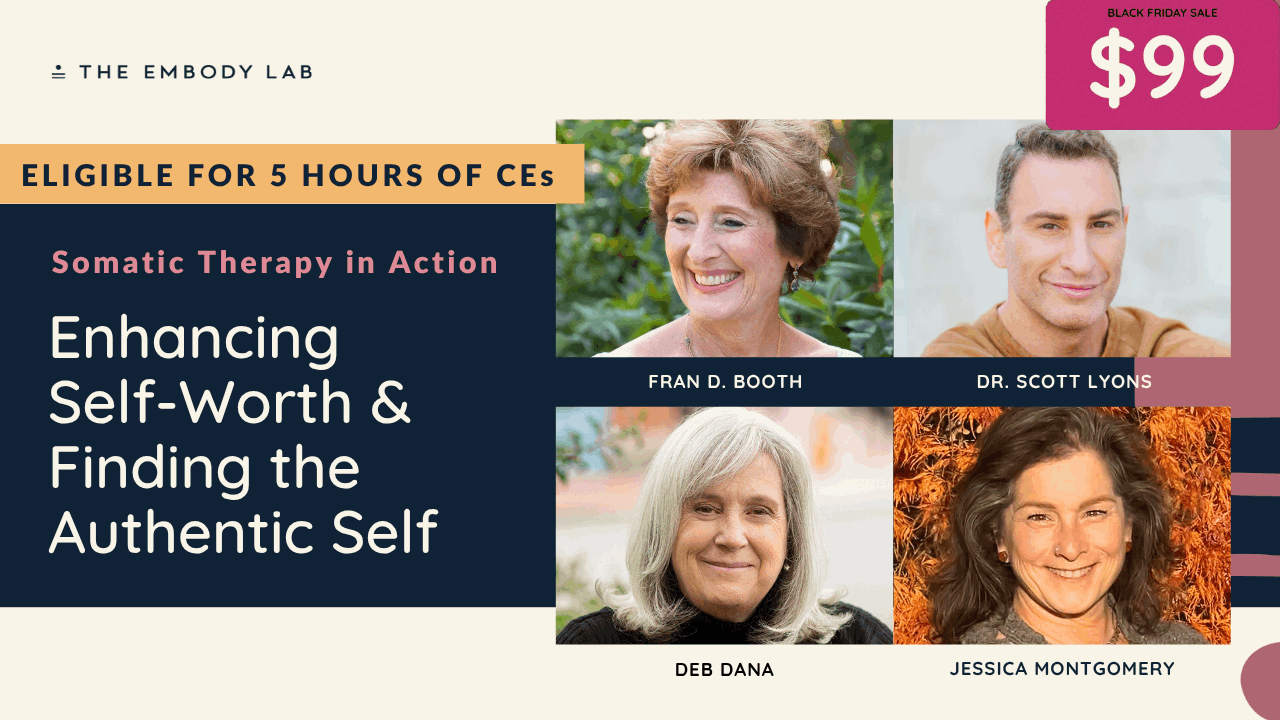
Somatic Therapy in Action: Enhancing Self-Worth & Finding the Authentic Self
$447 $99
In Trauma Healing, there’s theory, and there are tools. As practitioners, real transformation and growth happen when you see it all come together in the body.
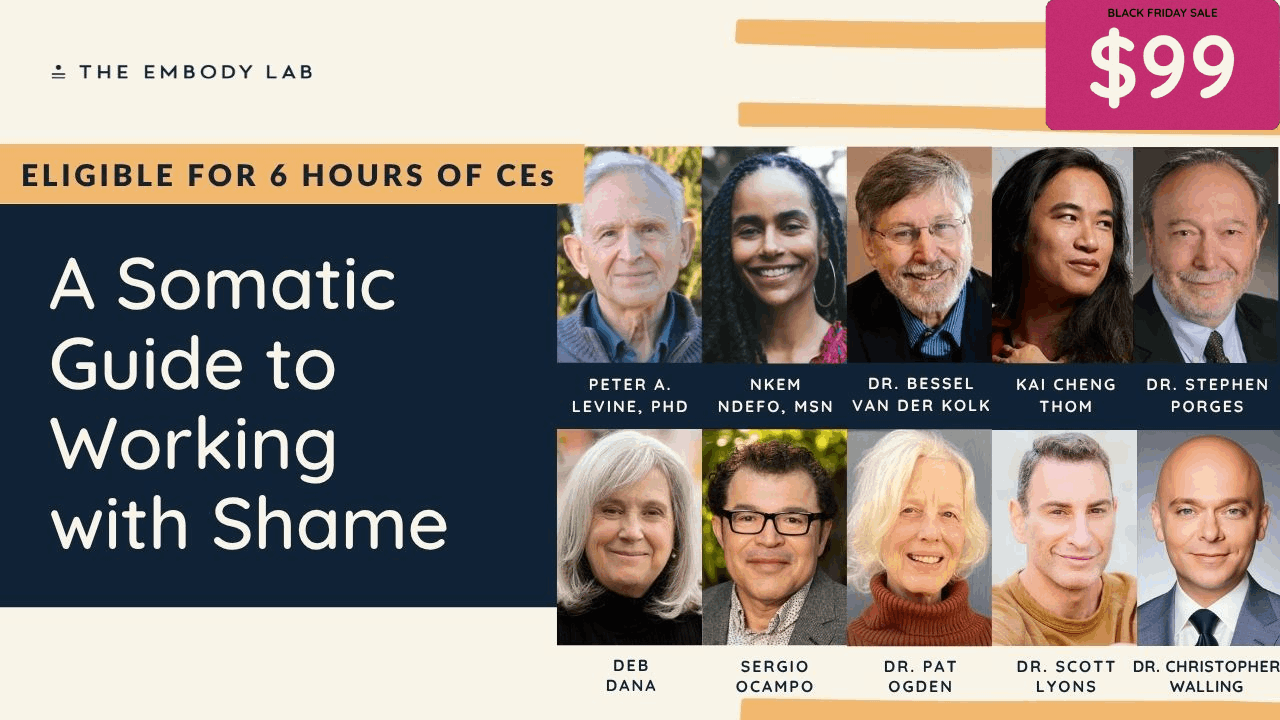
A Somatic Guide to Working with Shame
$497 $99
In Trauma Healing, there’s theory, and there are tools. As practitioners, real transformation and growth happen when you see it all come together in the body.
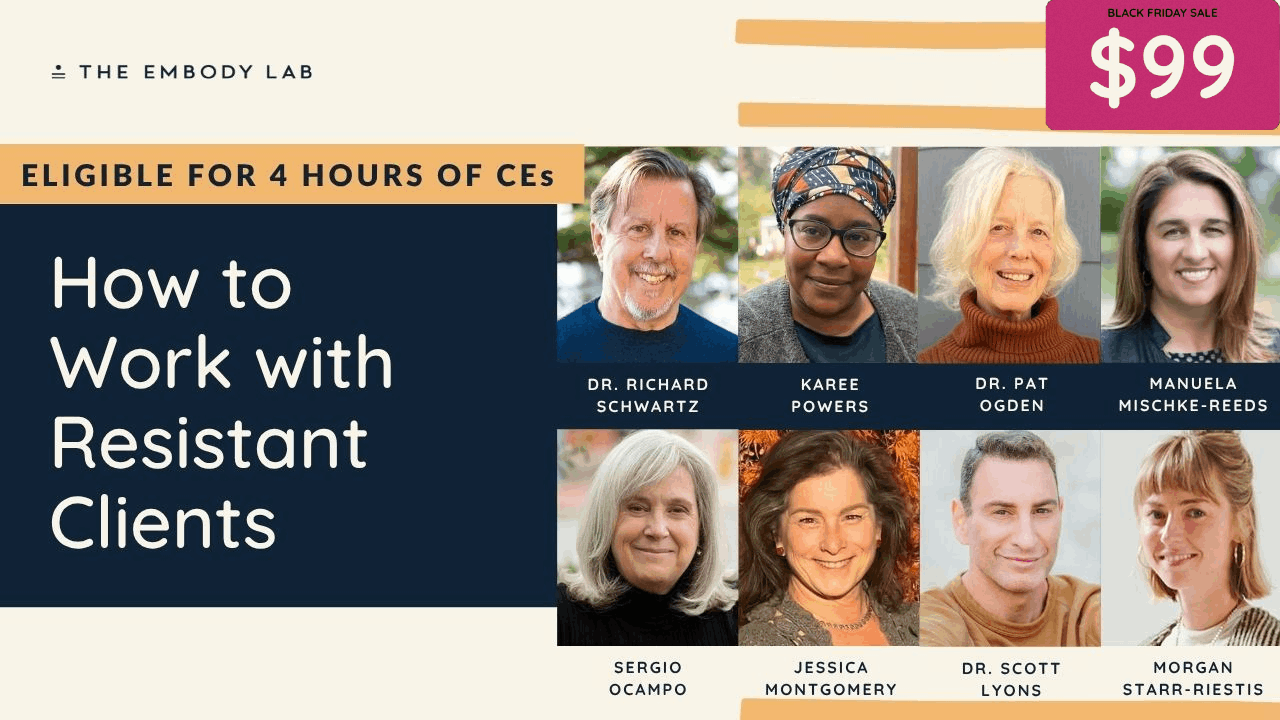
How to Work with Resistant Clients
$447 $99
In Trauma Healing, there’s theory, and there are tools. As practitioners, real transformation and growth happen when you see it all come together in the body.
List your practice on The Embody Lab’s Somatic Therapist & Practitioner Directory!
More somatic therapy seekers come to The Embody Lab in their search for the right therapist than to any other somatic therapy site. We’ll help your practice be seen by hundreds of thousands of potential clients seeking your services.
Join The Directory Here